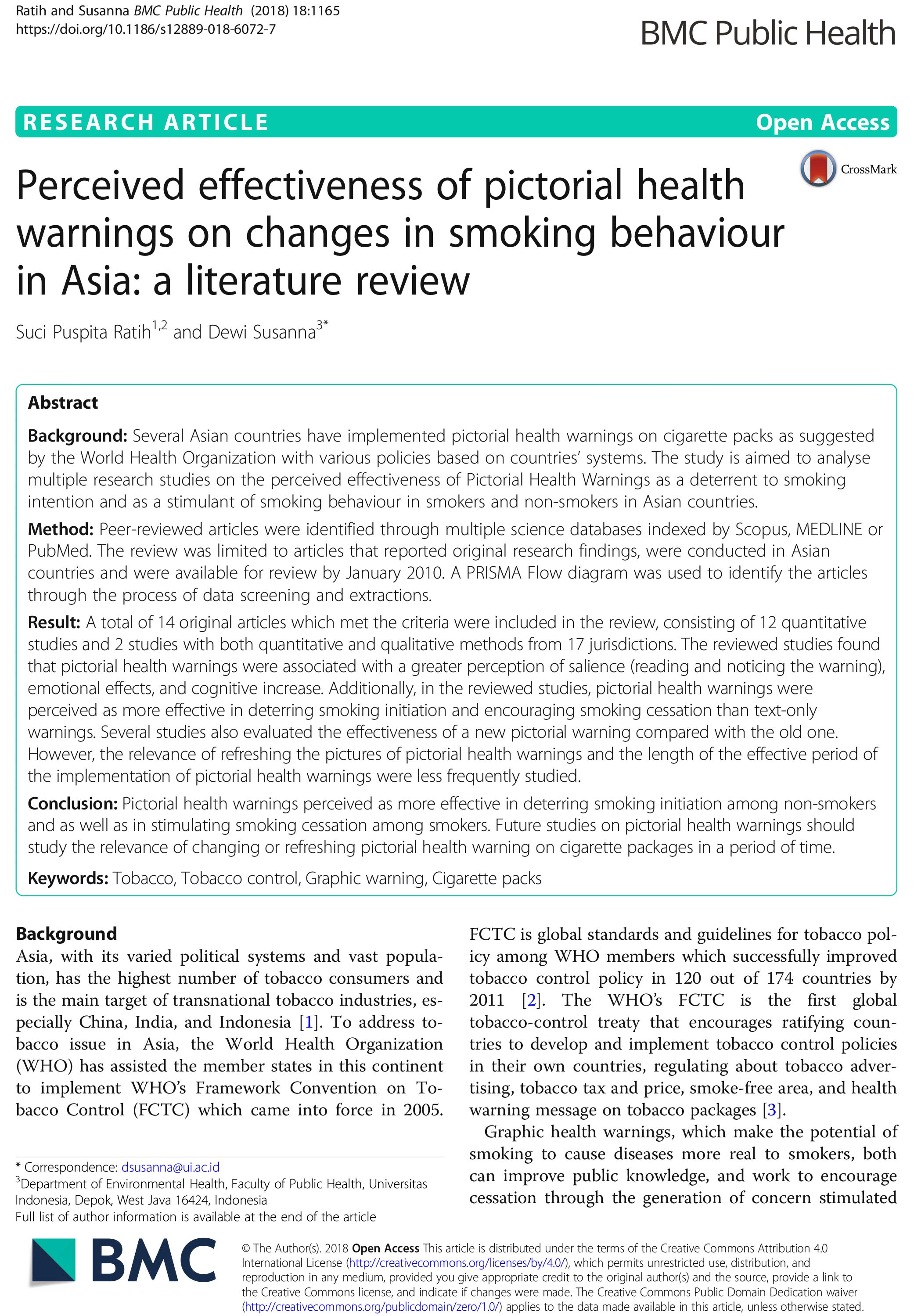
The research paper "Perceived Effectiveness of Pictorial Health Warnings on Changes in Smoking Behaviour in Asia: A Literature Review" examines the impact of pictorial health warnings (PHWs) on smoking behavior across various Asian countries. The study systematically reviews 14 original research articles and finds that PHWs are generally more effective than text-only warnings in discouraging smoking initiation and encouraging cessation. The findings indicate that graphic warnings elicit stronger emotional and cognitive responses, particularly fear and disgust, making smokers more likely to consider quitting. The research also highlights that larger warning labels covering a significant portion of cigarette packs are more noticeable and influential. While PHWs were found to be effective in deterring smoking, the study suggests that regularly updating these warnings enhances their impact over time. Additionally, the research underscores the importance of contextual factors, such as literacy levels and cultural perceptions, in determining the effectiveness of PHWs. The study concludes that stronger enforcement, periodic renewal of warning images, and complementary public awareness campaigns are essential for maximizing the impact of PHWs on smoking reduction in Asia.