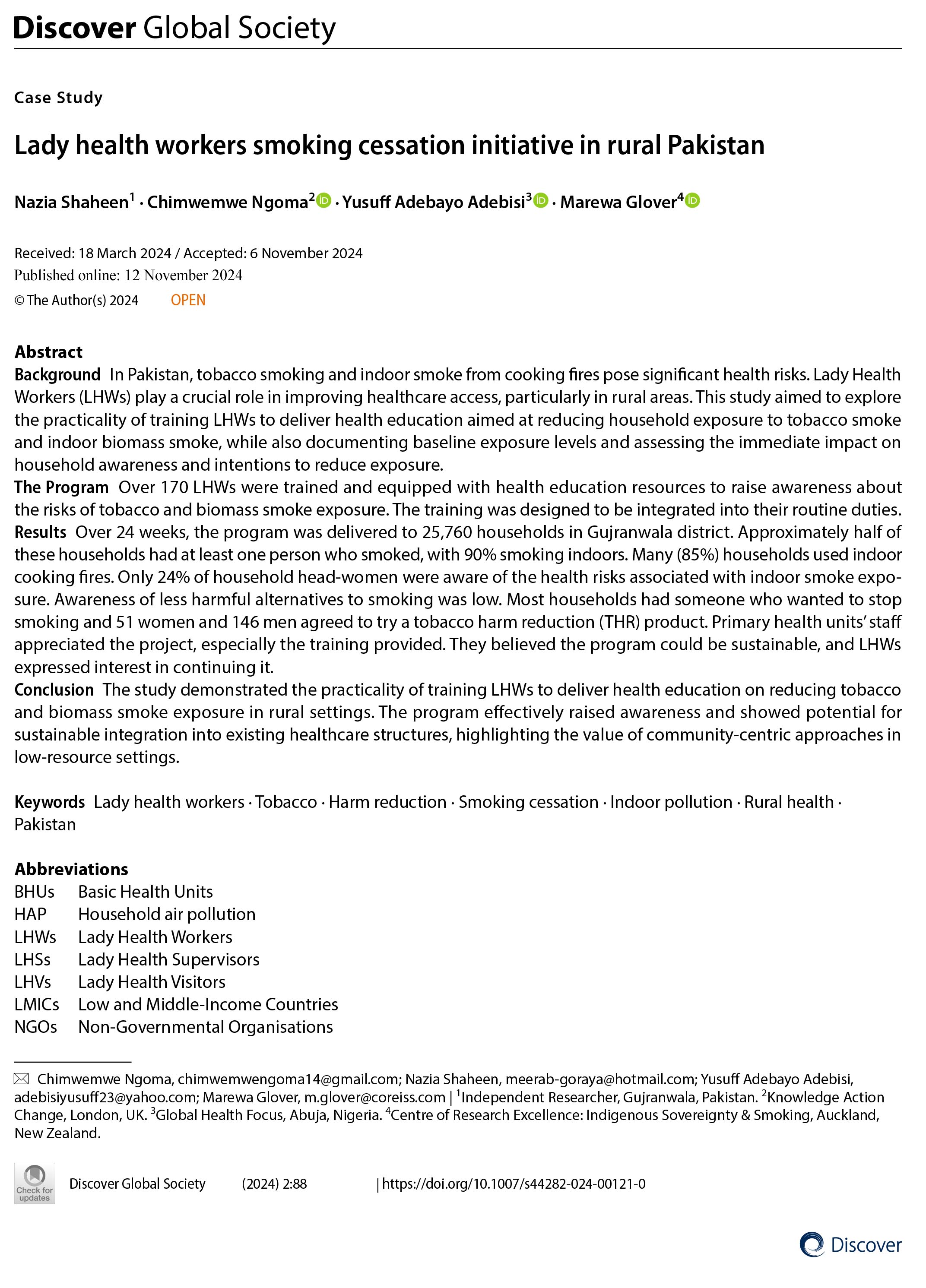
The research paper "Lady Health Workers Smoking Cessation Initiative in Rural Pakistan" explores the feasibility of training Lady Health Workers (LHWs) to deliver health education on reducing tobacco and biomass smoke exposure in rural communities. Conducted in Gujranwala district, the study involved 170 LHWs, who reached 25,760 households over 24 weeks. The findings reveal that 51% of households had at least one smoker, with 90% smoking indoors, and 85% used indoor cooking fires, leading to high exposure to secondhand smoke and indoor air pollution. Awareness of the associated health risks was low, with only 24% of household head-women recognizing the dangers of biomass smoke. However, many smokers expressed a desire to quit, and 197 individuals (51 women and 146 men) attempted tobacco harm reduction (THR) strategies. The initiative was well received by primary health unit staff and LHWs, who found it practical and sustainable for integration into routine healthcare. The study highlights the effectiveness of community-based interventions in tobacco control and underscores the need for long-term policy support, improved awareness campaigns, and enhanced enforcement to sustain these efforts in low-resource settings.