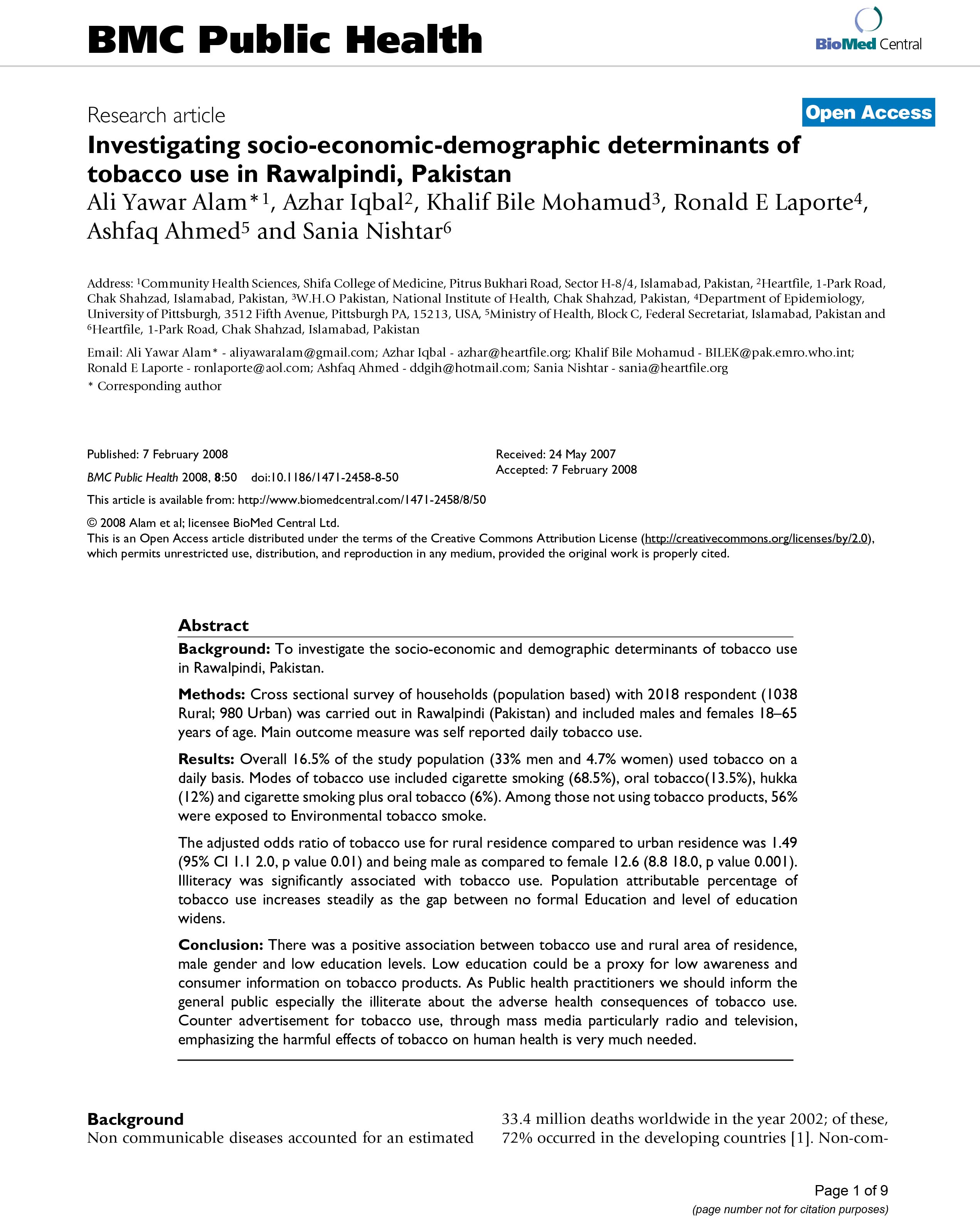
The research paper "Investigating Socio-Economic and Demographic Determinants of Tobacco Use in Rawalpindi, Pakistan" explores the factors influencing tobacco consumption among adults aged 18 to 65 years in both rural and urban areas. Based on a cross-sectional survey of 2,018 respondents, the study found that 16.5% of the population were daily tobacco users, with significantly higher prevalence among males (33%) compared to females (4.7%). Cigarette smoking was the most common form of tobacco use (68.5%), followed by oral tobacco (13.5%) and hookah (12%). The analysis revealed that rural residence, male gender, and low education levels were significantly associated with higher tobacco use, suggesting that lack of awareness and lower literacy contribute to increased consumption. Additionally, 56% of non-smokers were exposed to secondhand smoke, underscoring the widespread public health risks. The study highlights the urgent need for community-based education programs, stricter regulations, counter-advertising campaigns, and taxation policies to reduce tobacco consumption, particularly in rural and low-income populations. It calls for greater enforcement of smoke-free laws and increased public awareness to curb tobacco-related health risks in Pakistan.