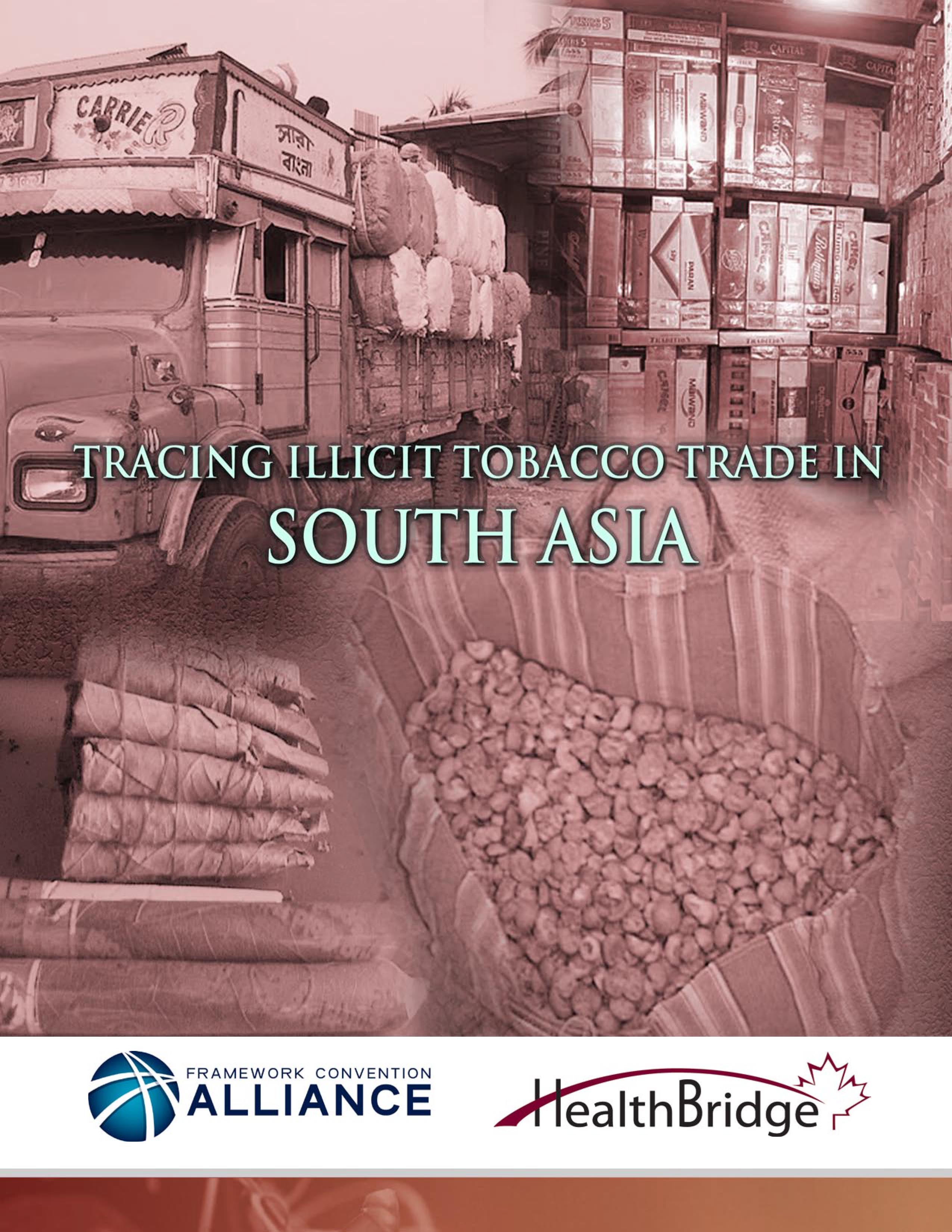
The research paper "Illicit Tobacco Trade in South Asia" examines the scale, nature, and impact of illicit tobacco trade across Bangladesh, India, Pakistan, and Sri Lanka, highlighting how weak regulatory frameworks, border vulnerabilities, and industry tactics fuel illegal tobacco markets. The study finds that illicit trade accounts for a significant portion of the tobacco market in these countries, undermining public health measures, tax revenues, and economic stability. Smuggling routes are particularly active along the Pakistan-Afghanistan border, India's northeastern states, and Bangladesh’s coastal and land borders, where organized crime networks, weak enforcement, and corruption facilitate the illegal flow of cigarettes, bidis, and other tobacco products. The research also uncovers the role of Free Trade Zones (FTZs) and tax differentials in enabling tobacco companies to evade duties, thereby making tobacco products more affordable and accessible, particularly to youth and low-income groups. The study recommends strengthening border security, enforcing tax regulations, eliminating industry interference, and fostering regional cooperation to curb illicit tobacco trade effectively. It also emphasizes the need for robust tracking and tracing systems and multilateral policy interventions to disrupt illegal tobacco supply chains and enhance public health outcomes across South Asia.