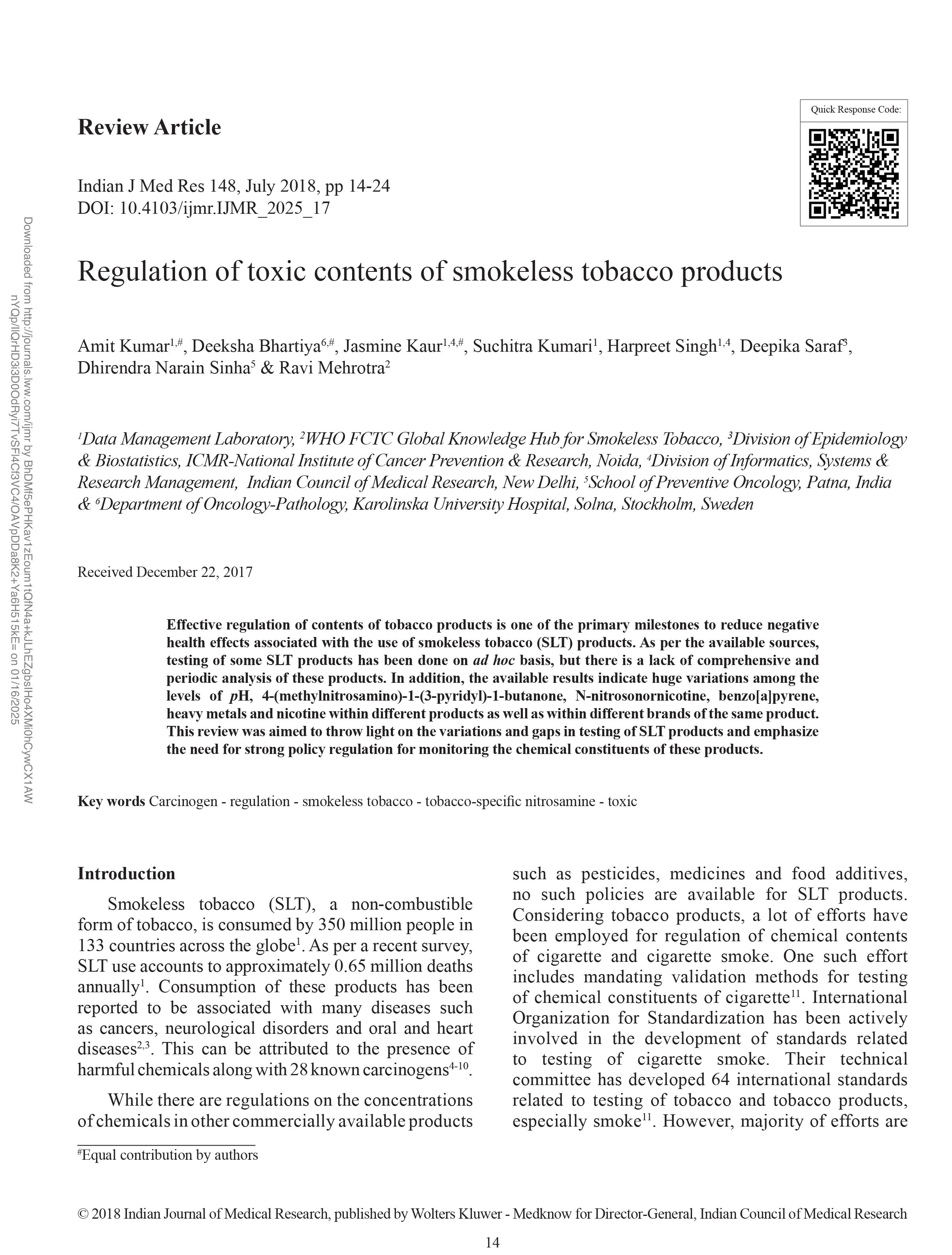


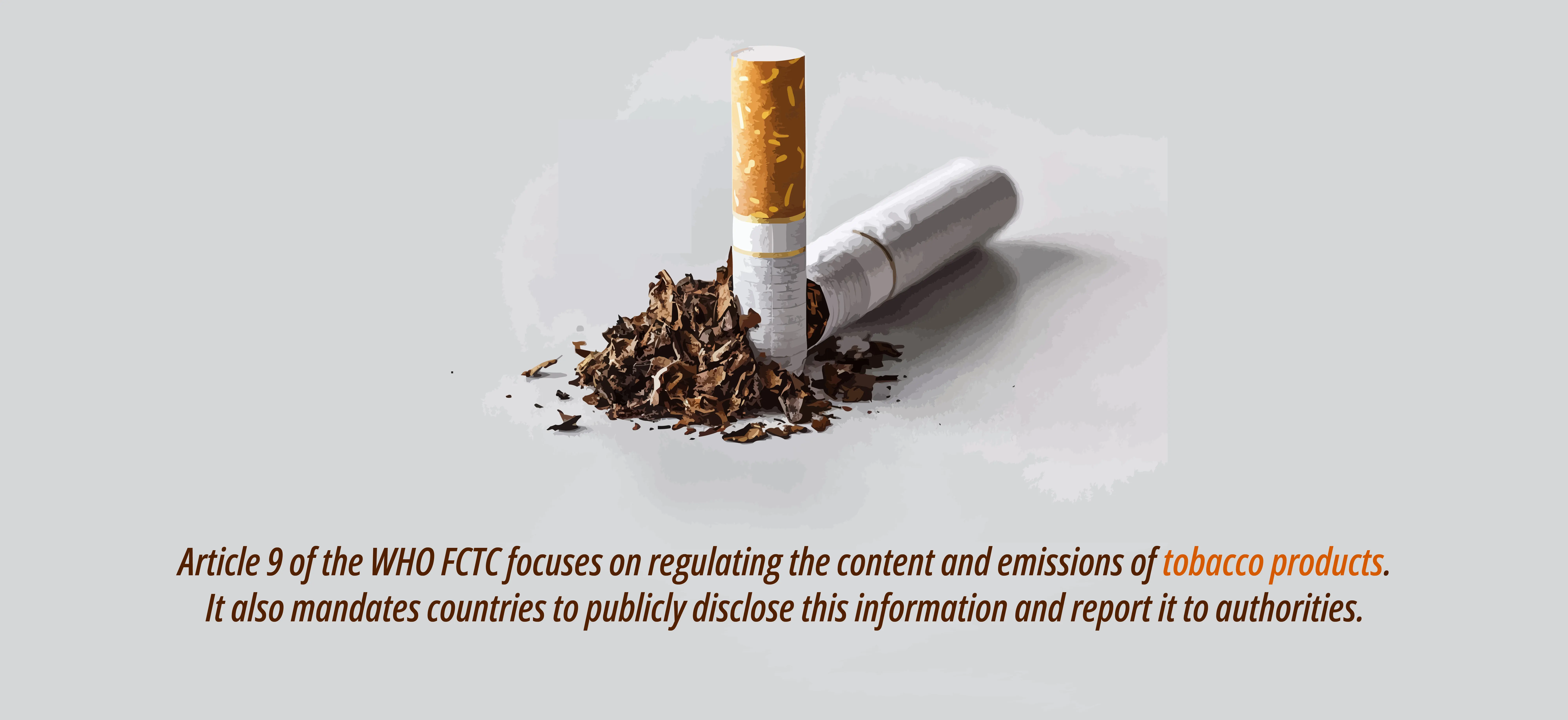
Article 9 of the WHO Framework Convention on Tobacco Control (FCTC) focuses on the regulation of the contents and emissions of tobacco products to protect public health. This article acknowledges that the chemicals and toxic substances found in tobacco products pose significant risks to smokers and non-smokers alike. It calls on countries to establish strict regulatory frameworks to monitor, measure, and limit the levels of harmful substances in tobacco products, such as nicotine, tar, and carbon monoxide, among others. Additionally, Article 9 mandates the regulation of tobacco product disclosures, ensuring that manufacturers provide detailed and transparent information about the ingredients and emissions of their products. This helps policymakers, researchers, and consumers make informed decisions regarding tobacco use. By implementing these measures, governments can reduce the health risks associated with tobacco consumption, prevent misleading claims by the tobacco industry, and strengthen their broader tobacco control efforts. The ultimate aim of Article 9 is to minimize the harm caused by tobacco products, empower public health authorities with scientific data, and support the development of evidence-based policies that contribute to reducing tobacco-related morbidity and mortality worldwide.
Publications & Documents